Key takeaways
“Antique gold” can mean a true 100-year-old antique, a vintage piece, new gold with an antique finish, or a plated imitation.
Most antique gold sold today is new 22K or 18K jewellery, valued by weight, purity and making charges.
Genuine antiques may lack hallmarks and need proper testing.
Compare making charges, because they can change the price by tens of thousands of rupees on a heavy set.
Keep antique-finish pieces dry and have the finish touched up by the jeweller.
Your grandmother opens an old steel trunk and lifts out a heavy haar wrapped in soft cotton. It is not shiny. It has a warm, deep, slightly dark glow, and every curve is full of tiny detail. A cousin getting married says, “I want something like this, but new.” The jeweller nods and shows a brand-new set in the same style, and calls it antique gold.
So which one is “antique”? Both, in everyday language. But they are very different things, and mixing them up is how people overpay. This guide explains what antique gold jewellery really means in India, how the different types are made, what they are worth and how to check what you are holding.
Quick answer: what is antique gold jewellery?
In the strict sense, antique gold jewellery is a piece that is at least 100 years old. In everyday Indian jewellery shopping, “antique gold” usually means new 22K or 18K gold jewellery given a matte, dark or burnished finish in a traditional style, such as temple or nakshi work. A third group, gold-plated brass made to look similar, is also sold under the same name, and it is not solid gold.
The four things people mean by “antique gold”
1. A true antique. The piece is at least 100 years old. This is also the benchmark used in Indian law. The Antiquities and Art Treasures Act, 1972 defines an antiquity as an article of art or craftsmanship that has existed for not less than 100 years. These pieces are rare, and many carry the wear and patina of generations.
2. Vintage. Jewellers and collectors usually call pieces between roughly 40 and 99 years old “vintage”. Your mother’s wedding set from the 1980s probably falls here.
3. Antique-finish gold (the most common). This is brand-new jewellery made in solid 22K or 18K gold, designed to look old. It has a soft matte surface, darker recesses and a warm tone instead of a mirror shine. It is what most shops mean when they say “antique collection”.
4. Antique-look imitation. These are pieces plated with a thin layer of gold over brass or another alloy. They look similar from a distance but contain little or no gold, and they wear away with use. If the price looks too low for the weight, this is usually why.
How antique-finish gold is made
Jewellers start with ordinary gold, usually 22K, which is 91.6% gold, though 18K at 75% is also used. After the piece is cast or handmade, the surface is treated to look aged. This typically involves a matte or satin polish, darkening of the deeper grooves with an oxidising or blackening treatment, and sometimes a protective coating.
The important point is that the finish is a surface treatment. It sits on top of the gold, and water, perfume and rubbing can wear it. The gold underneath is real, but the “old look” can fade and may need to be re-polished.
Popular antique gold styles in India
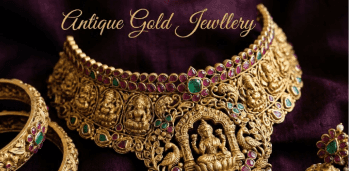
Temple jewellery. Inspired by South Indian temple art, with Goddess Lakshmi, peacocks, lotuses and divine motifs. Long haram necklaces, kasu mala, vaddanam waist belts and jhumkas are classics.
Nakshi. Hand-engraved or embossed gold with fine, detailed figures and floral patterns.
Kundan, polki and jadau. Gold set with uncut stones in a foil-backed or traditional technique. Many of these pieces are antique in feel because of their royal Rajasthani and Mughal roots.
Meenakari. Gold with coloured enamel work.
Maharashtrian heritage styles. Thushi, Kolhapuri saaj, putli haar and chinchpeti are the pieces most families here would recognise.
Antique bangles, kadas and chandbalis. Heavy and bold, popular for weddings and festivals.
Antique gold vs normal gold
Look. Normal gold jewellery is usually bright and glossy. Antique gold has a soft, warm, matte or burnished look.
Design. Normal pieces range from minimal to modern. Antique styles lean on deities, temple architecture, birds, flowers and heavy detailing.
Weight and making charges. Antique-finish pieces are often broad and heavy, and the handwork is intricate, so the gold weight and making charges can both be higher.
Care. Ordinary plain gold can handle a quick soak in soapy water. A finished antique piece cannot, because water and cleaners can spoil the polish.
Purity. Both can be 22K or 18K, so purity is not what separates them. The finish and the design are.
Purity and hallmarks
New gold jewellery sold in India is covered by BIS hallmarking. The allowed purities are 14, 18, 20, 22, 23 and 24 carat, and each hallmarked piece carries the BIS logo, the purity mark (22K916, for example) and a six-character alphanumeric HUID code. You can verify a HUID through the BIS Care app.
Kundan, polki and jadau jewellery lost its hallmarking exemption in the second phase of the rules, so these can also be hallmarked.
Old pieces are different. The government has clarified that old unhallmarked jewellery in households can be sold to jewellers, and jewellers can continue to buy it back. This is why many genuine antiques carry no hallmark at all. A missing hallmark on an old piece does not make it fake, but it does mean the purity has to be tested.
Is antique gold worth more than normal gold?
It depends on which kind you mean.
Antique-finish gold (new). It is worth its gold content, just like any other gold jewellery. You pay for the weight, the day’s gold rate, GST (3% on gold value and 5% on making charges) and the making charge. The antique look does not add resale value.
A genuine antique. It can be worth more than its gold weight if it is rare, well made, from a documented maker or has original stones in good condition. But that extra value usually appears only when you sell through a specialist dealer or an auction house.
What a local jeweller will pay. Most jewellers value old jewellery by purity and weight, not age, and they deduct for wastage or testing. Making charges are generally not returned.
Here is a simple, illustrative example. Say you want a 40-gram antique-finish necklace in 22K gold, and for easy maths assume the rate is ₹13,200 per gram, which makes the gold value ₹5,28,000.
With a making charge of 15%, you pay ₹79,200 for the making.
With a making charge of 8%, you pay ₹42,240.
The difference is ₹36,960, for the same weight of gold.
That gap is larger than a typical week of gold price movement. So compare making charges as carefully as you compare rates.
According to the World Gold Council, India bought 430.5 tonnes of gold jewellery in 2025, down 24% from 563.4 tonnes in 2024 as record prices cooled buying. At these price levels, heavy traditional pieces are a serious purchase, so plan the budget by weight before you fall for a design.
How to identify real antique gold jewellery
No single test is enough. Use several together.
Look for marks. Check for a maker’s mark, purity stamp or hallmark on the inside of rings, the back of pendants or the clasp. Old marks can be worn or absent.
Check the wear. Genuine age shows as softened edges, gentle wear on high points and darker residue in the recesses. Be careful, as modern pieces can be artificially “aged”.
Look at the construction. Older pieces often show hand-soldered joins, hand-engraved detail, hollow sections filled with lac and simple screw or hook clasps.
Study the stones. Foil-backed stones, uncut diamonds (polki), and old-style cuts suggest age. Modern machine-cut stones in a supposedly very old piece are a warning sign.
Notice the colour. Older gold often looks warmer or slightly rosy because of the copper in the alloy.
Test the weight and feel. Gold is dense and heavy for its size. A light, hollow-sounding piece may be plated.
Do not rely on the magnet test. Gold is not magnetic, but many non-gold metals are not magnetic either. A magnet can rule out some fakes but cannot prove gold.
Get it tested. A jeweller can run a touchstone or acid test, and a BIS-recognised assaying and hallmarking centre can check purity. Do not scratch or file your piece at home to test it.
If you are buying an expensive “old” piece, ask for written details of purity, weight, origin and any repairs, and consider a second opinion.
A legal point most buyers do not know
Under the Antiquities and Art Treasures Act, 1972, an antiquity, which includes articles of art and craftsmanship that are at least 100 years old, cannot be exported from India except by the government or an authorised agency. If you own a very old heirloom and plan to take it abroad or sell it overseas, check the rules with the Archaeological Survey of India first. A piece that looks like a family jewel can still fall under this law.
How to care for antique-finish gold
Keep it dry. Avoid soaking, washing or wearing it in the shower.
Put on perfume, hairspray and makeup before the jewellery, not after.
Wipe with a clean, soft, dry cloth after each wear.
Store it in a soft cloth pouch, separate from other pieces.
If the finish fades or gets patchy, go back to the jeweller for re-polishing instead of trying home cleaners.
Ask about re-polishing charges and what the shop guarantees about the finish before you buy.
Buying antique gold jewellery: a quick checklist
Confirm whether it is solid 22K or 18K gold or plated.
Look for the BIS hallmark and the HUID code on new pieces.
Ask for a bill showing net weight, stone weight, purity, making charge and GST separately.
Check the buy-back and exchange policy in writing.
Compare the making charge percentage across at least two jewellers.
Check the live rate on the day you buy.
Rates change through the day, so see the gold rate in Mumbai or the gold rate in Delhi before you walk in. For the national price, see the gold rate today, and if you are near Boisar, check the gold rate today in Boisar.
Frequently asked questions
What is antique gold jewellery?
Strictly, it is jewellery that is at least 100 years old. In everyday Indian shopping it usually means new 22K or 18K gold jewellery with a matte, dark or burnished finish in a traditional design.
What is the difference between antique gold and normal gold?
The gold can be the same purity. The difference is the finish and design. Antique gold has a soft, aged look and heavy traditional patterns, while normal gold is usually bright and polished.
Is antique gold real gold?
It can be. Antique-finish jewellery from a hallmarked jeweller is solid gold. Cheaper “antique look” pieces may be gold-plated brass, so check the hallmark and the bill.
Is antique gold worth more than gold?
Antique-finish gold is worth its gold content only. A genuine antique can be worth more if it is rare and well documented, but most jewellers will pay by weight and purity.
How can I identify antique gold jewellery?
Look for marks, natural wear, hand-finished construction and old-style stones, then get it tested by a jeweller or an assaying centre. Do not rely only on colour or a magnet.
How is antique gold jewellery made?
The jewellery is made in gold, usually 22K, and then given a matte or burnished surface with darkened recesses, often using an oxidising or blackening treatment.
Is the antique finish permanent?
No. It is a surface treatment that can fade with water, perfume and rubbing, and it may need re-polishing.
Can I sell old antique gold jewellery?
Yes. Old unhallmarked jewellery can be sold to jewellers, who value it by purity and weight. For a possible collector premium, approach a specialist dealer or auction house.
What is antique gold jewellery called in India?
Common names include temple jewellery, nakshi jewellery, kundan, polki, jadau and heritage or traditional jewellery, depending on the style and region.
Last updated: 24 October 2026. This guide is for general information only. For heirloom, antique or high-value pieces, check with a trusted BIS-hallmarked jeweller or a recognised assaying and hallmarking centre.