What Is 24 Carat Gold?
24 carat (24K) gold is the purest form of gold commercially available - 99.9% pure, with virtually no other metals. It is also called 'fine gold' or '999 gold' based on its purity marking.
It has a richer, deeper yellow colour than 22K or 18K gold and carries undeniable prestige. But in jewellery, purity and practicality do not always go hand in hand.
Why Is Pure 24K Gold Too Soft for Jewellery?
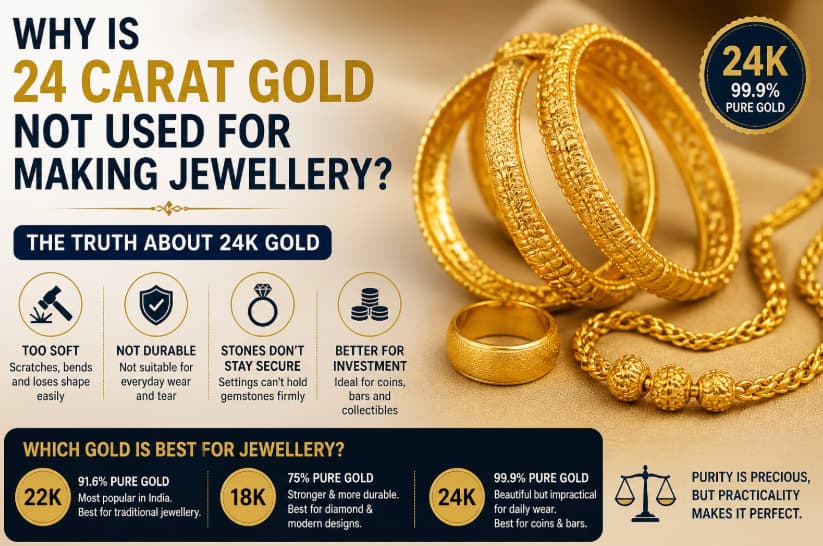
Gold scores just 2.5 to 3 on the Mohs hardness scale - softer than a human fingernail (rated ~2.5). Copper and steel are significantly harder.
What this means in everyday use:
· A 24K gold ring worn daily would visibly dent and scratch within weeks.
· A 24K necklace would lose its shape from daily movement and pressure.
· Gemstone settings in 24K gold would fail to hold stones securely.
· Fine detail work - such as engraving or filigree - would blur and distort quickly.
Adding even a small percentage of silver, copper, or zinc to gold dramatically increases its hardness, making the resulting alloy far more suitable for daily wear.
Can 24K Gold Jewellery Be Made at All?
Yes - technically. In countries like China, Thailand, and parts of the Middle East, 24K gold jewellery is sold as cultural or investment-grade pieces. These are typically bulkier in design (think solid bangles) to compensate for the softness.
In India, 24K gold is used for coins, bars, and select ceremonial items - but these are kept safe, not worn regularly.
When Is 24K Gold Actually Used?
· Gold coins and investment bars (most common global use)
· Gold leaf in sweets such as vark on mithai
· Decorative idols and display items (not meant for wear)
· Ceremonial jewellery in South and Southeast Asia (worn very infrequently)
· Electrodeposited (EDI) gold plating in electronics
For everyday jewellery - rings, necklaces, earrings, bangles - 24K gold is simply not the right choice.
Which Karat Gold Is Best for Jewellery - 18K, 22K, or 24K?
Here is a quick comparison to help you decide:
· 22K Gold - 91.6% pure gold. The most popular choice for Indian jewellery. Strong enough for intricate work, with high gold content and excellent resale value. Best for: bangles, necklaces, earrings, and traditional sets.
· 18K Gold - 75% pure gold. Harder and more durable than 22K. Preferred for diamond and gemstone jewellery where settings must grip stones firmly. Best for: rings, pendants, and engagement jewellery.
· 24K Gold - 99.9% pure gold. Beautiful but impractical for daily wear. Best for: coins, bars, and collectibles - not for ornaments you intend to wear regularly.
Before buying, check the 22K gold price today and the 24K gold rate in India on GoldInforma to confirm the karat difference is accurately reflected in the price you are quoted.
Is Jewellery Made of Pure 24K Gold Worth Buying?
If you intend to wear it: probably not. The premium you pay for 24K purity does not translate into better wearability - quite the opposite. You are paying more for a piece more likely to get damaged with regular use.
If your goal is investment: 24K gold in the form of coins or bars is more efficient. Jewellery carries making charges that are lost on resale, while coins and bars are priced close to actual gold value.
Bottom line:
24K gold is valuable - but its value is best preserved in its purest, non-jewellery form.
Frequently Asked Questions (FAQs)
Why is 24 carat gold not used for making jewellery?
Pure 24K gold is extremely soft and malleable. It scratches and bends easily, making it impractical for ornaments worn regularly. Jewellers prefer 22K or 18K gold, which are alloyed with other metals for increased hardness and durability.
Can 24 carat gold be used for rings?
It can technically be made into a ring, but it is not advisable for everyday wear. A 24K ring will scratch and deform with daily use. For rings worn regularly, opt for 18K or 22K gold.
Which karat gold is best for jewellery in India?
22K gold is the standard choice for most traditional Indian jewellery. For studded or contemporary designs, 18K is often preferred due to its hardness and better grip on gemstone settings.
Is 24K gold real gold?
Yes. 24K gold is the purest form of real gold available - 99.9% pure. Lower karats like 22K and 18K are gold alloyed with other metals. This does not make them fake; they simply contain a lower percentage of gold.
Why do people buy 24K gold if it is not suitable for jewellery?
For investment purposes. Gold coins, bars, and ETFs in 24K form are cleaner, more efficient ways to invest in gold - without the making charges that reduce the resale value of jewellery.
Why Is Gold Used for Making Jewellery?
Gold is the ideal metal for jewellery because of its malleability, non-reactive nature, durability and lustrous appeal, thus gold is used for making jewellery. Understand 22K vs 24K and why platinum and silver are also used.
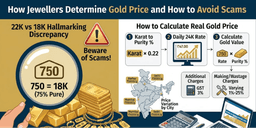
How to Calculate Gold Rate in India
Gold rate in India is calculated by converting international gold price (USD/ounce) to INR/gram, then adding import duties, taxes, and dealer margins. Use formulas like 22K = 24K × (22/24) to adjust for purity.