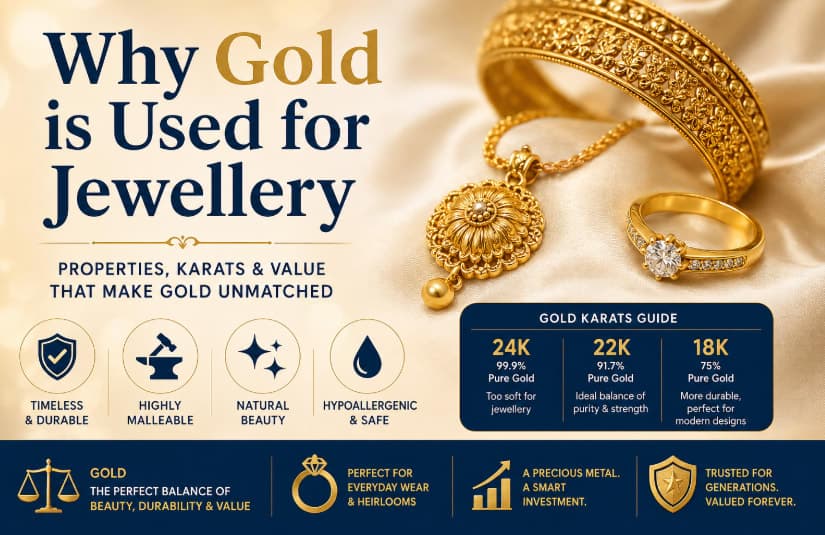
In this guide, we break down the physical and chemical properties of gold that make it ideal for jewellery, explain the difference between 22K, 18K, and 24K gold, and explore why other metals like platinum and silver are also used — sometimes alongside gold. And if you're wondering how all of this connects to today's gold price in India, we've got you covered with real context.
Physical Properties That Make Gold Ideal for Jewellery
When metallurgists and jewellers talk about the 'ideal metal,' they're looking at a very specific set of characteristics — and gold checks every box. Let's go through them one by one.
1. Malleability and Ductility
Gold is one of the most malleable metals on Earth. A single gram of gold can be beaten into a sheet nearly one square metre in area. It can also be drawn into extremely fine wire without breaking — a property called ductility. For jewellery making, this means craftsmen can shape gold into intricate designs, delicate filigree work, and detailed carvings without the metal cracking or breaking. No other widely used metal comes close to gold's workability.
2. Non-Reactive and Corrosion-Resistant
Pure gold doesn't oxidise, tarnish, or corrode — not even in seawater or humid climates. This is a massive advantage over metals like iron, copper, or silver, which react with moisture and air over time. A gold ring from 3,000 years ago still looks like gold. This permanence is one of the core reasons gold is used for jewellery — it literally doesn't change. It remains as lustrous and radiant decades after purchase as the day it was made.
3. Density and Weight
Gold has a high density — about 19.3 grams per cubic centimetre. This means even a small gold ornament feels substantial and valuable in the hand. Jewellery buyers in India particularly associate this weight with quality. A light-feeling piece often triggers scepticism about purity, while a well-crafted gold bangle with the right heft instantly signals authenticity.
4. Hypoallergenic Nature
Pure gold doesn't cause skin reactions. For people with sensitive skin, this is hugely important. While some gold alloys (especially those mixed with nickel) can trigger reactions, high-purity gold — especially 22K and above — is generally safe for even the most sensitive skin. This is especially critical in India, where gold jewellery is worn continuously for cultural and religious reasons, not just for occasions.
5. Lustrous and Aesthetically Appealing
Gold has a naturally warm, yellow lustre that has been considered beautiful across virtually every civilisation in history. Unlike silver, which can appear cold and grey, or platinum, which is more subdued, gold's warm glow complements a wide range of skin tones — particularly the deeper, warmer tones that are common across South Asia and the Middle East. Its colour doesn't fade, doesn't change with lighting, and doesn't require polishing every few weeks.
Why 22K & 18K Gold Is Preferred Over 24K for Jewellery
Here's something that surprises many people: the purest form of gold — 24 karat — is actually not the most preferred for jewellery. That title goes to 22K gold in India and 18K gold in the international and designer markets. Here's why.
Gold karats measure the proportion of pure gold in an alloy. 24K gold is 99.9% pure gold. 22K gold contains 91.7% gold and 8.3% other metals — usually silver, copper, or zinc. 18K gold contains 75% gold, with 25% made up of alloying metals.
The alloying metals serve a critical purpose: they harden the gold. Pure 24K gold is simply too soft to hold its shape in everyday jewellery. A 24K ring would bend under normal pressure. A delicate pendant would lose its form. Gemstone settings in 24K gold wouldn't grip stones tightly enough — they'd slip or crack under minimal stress.
22K gold strikes the sweet spot: it's hard enough to be formed into detailed jewellery and hold its shape through daily wear, while still being high enough in purity to carry significant investment and resale value. In India, this is the standard for bridal jewellery, traditional ornaments, temple jewellery, and most heirloom pieces.
18K gold is preferred for jewellery featuring gemstones or diamonds. The slightly harder alloy grips stones more firmly and offers designers more creative flexibility in crafting intricate settings. If you've ever wondered why diamond rings from a premium brand often feel different from a regular gold bangle, the karat makes a significant difference. Want to know what 22K or 18K gold is trading at right now? Check the live gold rate today in mumbai.
Why 24 Carat Gold Is NOT Used for Jewellery
Let's address this directly because it's one of the most commonly searched questions: why isn't 24K gold used for making jewellery, even though it's the purest form?
The answer is structural. 24K gold is extremely soft — it scores just 2.5 on the Mohs hardness scale, which means it can be scratched by almost anything harder than a fingernail. In practical jewellery terms, this creates serious problems.
• It bends out of shape under daily wear, even with light contact.
• Prongs and settings for stones would be too weak to secure gemstones.
• Intricate designs would lose their sharpness and detail quickly.
• The surface would scratch, dent, and mark far too easily for regular use.
So while 24K gold bars and coins are the gold standard for investment (no pun intended), they don't translate to wearable jewellery without being alloyed first. 24K gold finds its use in investment products, electronics, medical devices, and gold plating — not in the bangles, necklaces, and rings worn every day across India.
That said, 24K gold jewellery does exist — it's simply not practical for everyday wear. Some ultra-luxury buyers in East Asia, particularly in China, prefer 24K jewellery as a store of value more than as fashion. But in the Indian market, 22K remains the clear king of bridal and traditional jewellery.
Why Platinum, Silver & Gold Are Used Together in Jewellery
It's not uncommon to find jewellery pieces that combine gold with silver accents, or rings that set gold-coloured gems on a platinum band. This isn't just an aesthetic choice — there's practical reasoning behind mixing these metals.
In high-end jewellery design, platinum is often used for settings (the part that holds gemstones) while the rest of the piece is yellow gold. Why? Because platinum is harder and stronger than gold, making it the superior choice for securing a precious stone — particularly diamonds. The band or body of the piece benefits from gold's warmth and traditional appeal, while the setting benefits from platinum's durability.
Silver is sometimes layered with gold plating (known as gold vermeil) to reduce cost while maintaining appearance. Sterling silver jewellery with gold plating gives buyers the look of solid gold at a fraction of the price. In Indian jewellery markets, this is increasingly common in fashion jewellery, as opposed to investment-grade or bridal pieces which are always solid gold.
Multi-metal designs also allow for contrasting aesthetics — combining white gold or platinum with yellow gold for two-tone pieces, or using rose gold (gold alloyed with copper) alongside traditional yellow gold for modern yet culturally rooted designs.
Gold vs Silver vs Platinum for Jewellery: A Complete Comparison
Still wondering how gold stacks up against its counterparts? Here's a clear, at-a-glance breakdown of the three most popular precious metals used in jewellery today.
Property | Gold | Silver | Platinum |
Tarnish Resistance | Excellent | Low | Excellent |
Malleability | Very High | High | Moderate |
Durability | High | Moderate | Very High |
Skin Sensitivity | Hypoallergenic | May react | Hypoallergenic |
Cost | High | Low | Very High |
Ideal Karat for Jewellery | 22K / 18K | 925 Sterling | 95% Pure |
Gold wins on the balance of properties: it's durable enough for everyday wear, valuable enough to hold as an investment, beautiful enough to stand the test of time, and culturally significant enough to feature in every major life milestone — from birth ceremonies to weddings to last rites. Silver is more affordable but less durable and less prestigious in the Indian context. Platinum is more durable and equally prestigious but significantly more expensive and harder to work with.
For most Indian buyers, particularly when it comes to bridal or investment jewellery, gold remains the undisputed choice. But if you're curious about how platinum and silver jewellery prices are trending relative to today's gold rates in India, it's worth comparing before making a purchase.
Is Pure Gold Suitable for Everyday Wear?
The short answer is no — at least not in its 24K form. Pure gold, while beautiful and valuable, is simply too soft for the demands of daily wear. It scratches easily, deforms under pressure, and cannot securely hold gemstones.
However, 22K gold — which is 91.7% pure — absolutely can be worn every day in most traditional forms like bangles, chains, and earrings, as long as they're reasonably thick and well-crafted. The small percentage of alloying metals gives it the structural integrity it needs without significantly compromising its gold content or investment value.
18K gold is even better suited to everyday wear, especially in ring form, because the higher alloy content makes it more scratch-resistant. Most everyday ring buyers — particularly those looking for engagement or wedding bands — are steered toward 18K for exactly this reason.
In practical terms: if you're buying jewellery for daily use, 22K is the Indian standard. If you want something that will truly last decades of continuous wear with minimal maintenance, consider 18K — especially for rings and bracelets that take more impact. And always buy from a certified jeweller who provides a hallmark certification so you know exactly what karat you're getting.
Frequently Asked Questions (FAQs)
1. Why is gold used for making jewellery and not other metals?
Gold is used for jewellery because of its unique combination of properties — malleability, corrosion resistance, natural beauty, and hypoallergenic nature. Very few metals offer all of these properties together. Iron rusts, copper tarnishes, silver is soft and reactive, and most other metals cause skin irritation. Gold remains stable, beautiful, and workable over centuries, which is why it has been the go-to choice for jewellery across all major civilisations.
2. Why are gold and platinum used for jewellery but not iron or steel?
Iron and steel are strong, but they corrode quickly when exposed to moisture and air. They also lack the visual appeal and workability required for fine jewellery. Gold and platinum, on the other hand, are corrosion-resistant, visually stunning, and capable of being shaped into intricate designs. Their rarity also gives them intrinsic value, which is important when jewellery serves both as adornment and investment.
3. Why gold, silver, and platinum are used to make jewellery but not other metals?
Gold, silver, and platinum belong to the group of 'noble metals' — metals that resist oxidation and chemical reaction under normal conditions. This makes them perfect for jewellery that must maintain its appearance over a lifetime. They're also rare enough to carry value, soft enough to be worked into fine designs, and safe for skin contact. Most other common metals fail on one or more of these criteria.
4. Is 22K or 24K gold better for jewellery?
For jewellery purposes, 22K gold is significantly better than 24K. While 24K gold is purer, it's too soft to be made into durable wearable pieces. 22K gold contains a small percentage of alloying metals that increase its hardness, allowing it to hold its shape and withstand daily wear. For investment purposes, 24K gold coins or bars are the superior choice. But for jewellery, 22K is the Indian industry standard. Check current 22K gold rates here.
5. Why is platinum more expensive than gold for jewellery?
Platinum is rarer than gold — significantly so. It's also denser, which means a platinum ring uses more metal by weight than a similarly sized gold ring. Platinum is also harder to work with, requiring more specialised craftsmanship and equipment. All of these factors push its price higher. That said, platinum jewellery is extremely durable and doesn't require replating over time, which can make it more cost-effective in the long run.
6. Why are gold and silver preferred for making jewellery over other metals?
Gold and silver are preferred because they are naturally beautiful, corrosion-resistant, easy to work with, and non-toxic for skin contact. Their long history as currency and store of value also gives them cultural and emotional significance in jewellery. Silver is more affordable, making it accessible for fashion and everyday jewellery, while gold's richer colour and higher value make it the preferred choice for investment-grade and traditional pieces.
7. Can you wear 24K gold jewellery daily?
Technically, yes — but it's not advisable. 24K gold jewellery will show scratches, dents, and deformation very quickly under daily wear. If you do own 24K gold jewellery, it's best kept for special occasions and stored carefully when not in use. For everyday wear, 22K or 18K gold is the practical choice, as these alloys are hard enough to hold their shape through regular activity.
8. Which karat of gold is most commonly used in Indian jewellery?
22K gold is by far the most commonly used karat in Indian jewellery — particularly for traditional and bridal pieces. It offers the best balance between purity and durability. 18K gold is also gaining popularity for diamond-studded and designer jewellery. 14K is less common in India but popular in Western markets. To stay updated on today's gold rates across India, including city-wise rates for Mumbai, Delhi, and Chennai, visit GoldInforma.
Final Word
Gold's role in jewellery isn't a coincidence — it's the result of thousands of years of human civilisation arriving at the same conclusion: no other metal matches gold's combination of beauty, durability, workability, and intrinsic value. Whether you're a first-time buyer, a bride planning her trousseau, or an investor looking to understand the metal market better, knowing why gold is used for jewellery gives you a foundation to make smarter decisions.
Ready to check how much your gold is worth today? Visit GoldInforma for live, accurate gold rates across India — updated in real time so you're always buying and selling with the right information.